Introduction
In international trade and shipping, the bill of lading (B/L) is one of the most essential documents. It acts as a receipt for goods, a contract of carriage, and in many cases, a document of title. A common question among importers, exporters, and new businesses entering global trade is: Are bills of lading mostly offered by logistics companies?
The short answer is yes—but not exclusively. To fully understand, it’s important to explore who issues bills of lading, how logistics companies are involved, and how the process works in real-world shipping operations.
What Is a Bill of Lading?
A bill of lading is a legal document issued by a carrier or its agent that confirms receipt of cargo for shipment. It contains critical details such as:
- Shipper and consignee information
- Description and quantity of goods
- Port of loading and destination
- Shipping terms and conditions
There are different types of bills of lading, including:
- Ocean Bill of Lading
- Air Waybill (for air cargo)
- House Bill of Lading (HBL)
- Master Bill of Lading (MBL)
Each type plays a role depending on how goods are transported and who manages the shipment.
Who Actually Issues Bills of Lading?
Bills of lading are primarily issued by carriers, but logistics companies often play a key role. Here’s a breakdown:
1. Shipping Lines (Carriers)
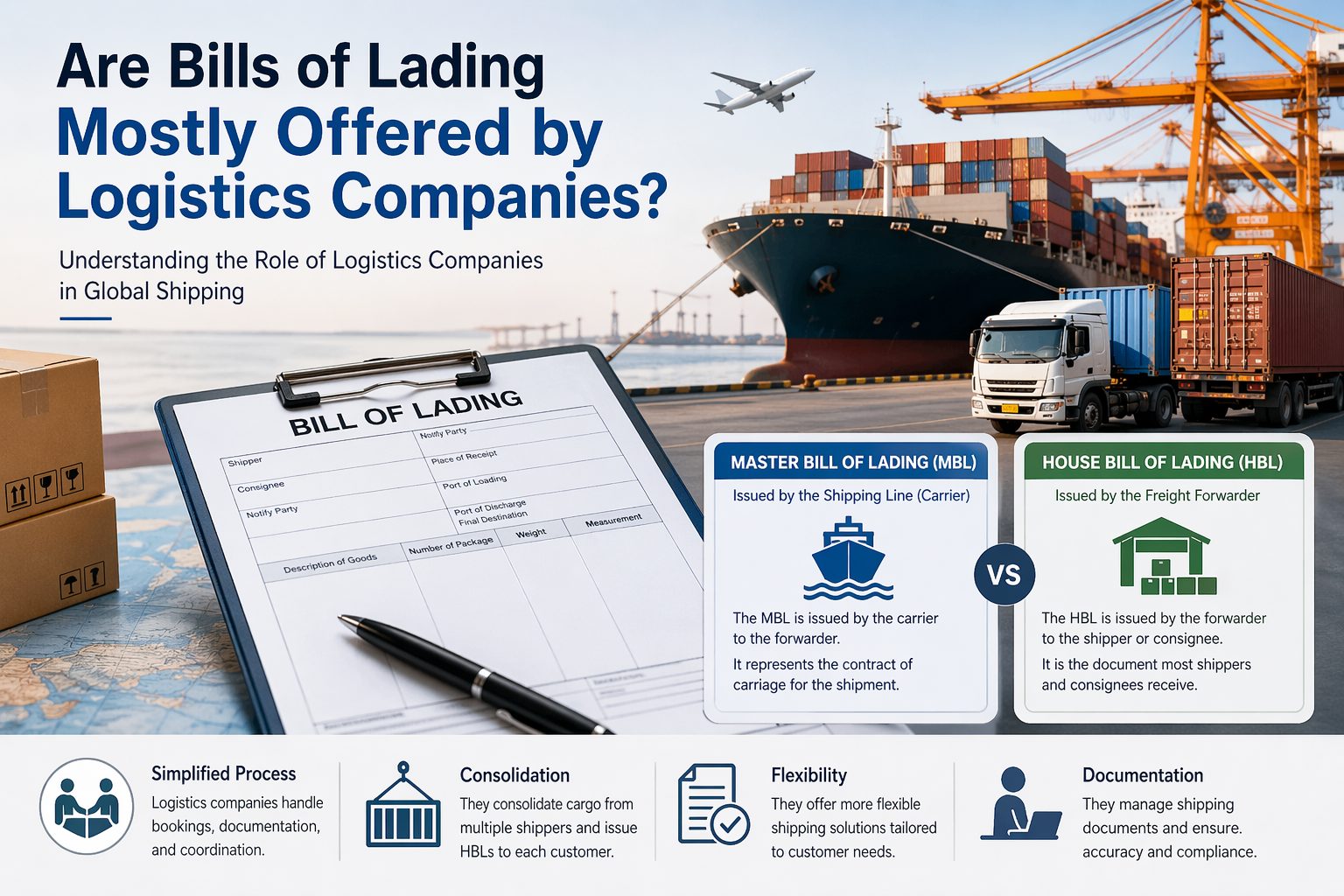
Ocean carriers are the original issuers of the Master Bill of Lading (MBL). This document reflects the contract between the shipper and the shipping line.
2. Freight Forwarders (Logistics Companies)
Freight forwarders—commonly referred to as logistics companies—issue the House Bill of Lading (HBL). This is where most businesses interact with bills of lading.
3. Non-Vessel Operating Common Carriers (NVOCCs)
NVOCCs function similarly to freight forwarders but operate as carriers in a legal sense. They issue their own bills of lading while contracting space with actual shipping lines.
Why Logistics Companies Commonly Provide Bills of Lading
Although carriers are the original source, logistics companies are often the ones businesses deal with directly. Here’s why:
Simplified Shipping Process
Logistics companies handle the entire shipping process—from booking cargo space to customs clearance—making them the main point of contact.
Consolidation Services
Freight forwarders consolidate cargo from multiple shippers into one container. In such cases, they issue individual House Bills of Lading to each customer.
Flexibility and Customization
Logistics providers can tailor documentation, shipping routes, and services based on client needs, which is not always possible when dealing directly with carriers.
Documentation Management
Handling international shipping paperwork can be complex. Logistics companies ensure bills of lading are correctly prepared, reducing errors and delays.
Are Bills of Lading Mostly Offered by Logistics Companies?
In practice, yes—most businesses receive their bills of lading from logistics companies rather than directly from carriers.
However, it’s important to understand the distinction:
- Carriers issue the Master Bill of Lading (MBL)
- Logistics companies issue the House Bill of Lading (HBL)
For most importers and exporters, the HBL is the document they interact with daily, which is why it seems like logistics companies are the primary providers.
When Do You Deal Directly with Carriers?
There are situations where businesses may work directly with shipping lines:
- Large-volume shippers booking full container loads (FCL)
- Companies with in-house logistics departments
- Direct carrier contracts for cost optimization
Even in these cases, many still rely on logistics partners for coordination and documentation support.
Key Differences: HBL vs MBL
| Feature | House Bill of Lading (HBL) | Master Bill of Lading (MBL) |
|---|---|---|
| Issuer | Freight forwarder / logistics company | Shipping line (carrier) |
| Used By | Shippers and consignees | Forwarders and carriers |
| Flexibility | High | Limited |
| Visibility | Customer-facing | Operational |
Final Thoughts
So, are bills of lading mostly offered by logistics companies? In everyday business practice, yes—but they are not the original issuers. Logistics companies act as intermediaries, providing businesses with accessible, flexible, and simplified documentation through the House Bill of Lading.
Understanding this distinction helps importers and exporters make better decisions, avoid confusion, and manage their shipping operations more effectively.
SEO Focus
Focus Keyphrase: Bills of lading logistics companies
Meta Description: Learn whether bills of lading are mostly offered by logistics companies, who actually issues them, and how they function in global shipping.

